Our impaCT
Co-Developed with UN Environment Programme
For one year, our project was accompanied and supported by experts from the UN Environment Programme (UNEP) during an early concept and strategy phase. Throughout this period, we regularly discussed how to embed sustainability and circularity as strongly as possible into our material concept, our planned production route, and our overall business model. This external perspective helped us design Ecolation with a clear focus on climate impact, resource efficiency, and realistic implementation in the construction sector from the very beginning.
WHY INSULATION NEEDS A RESET
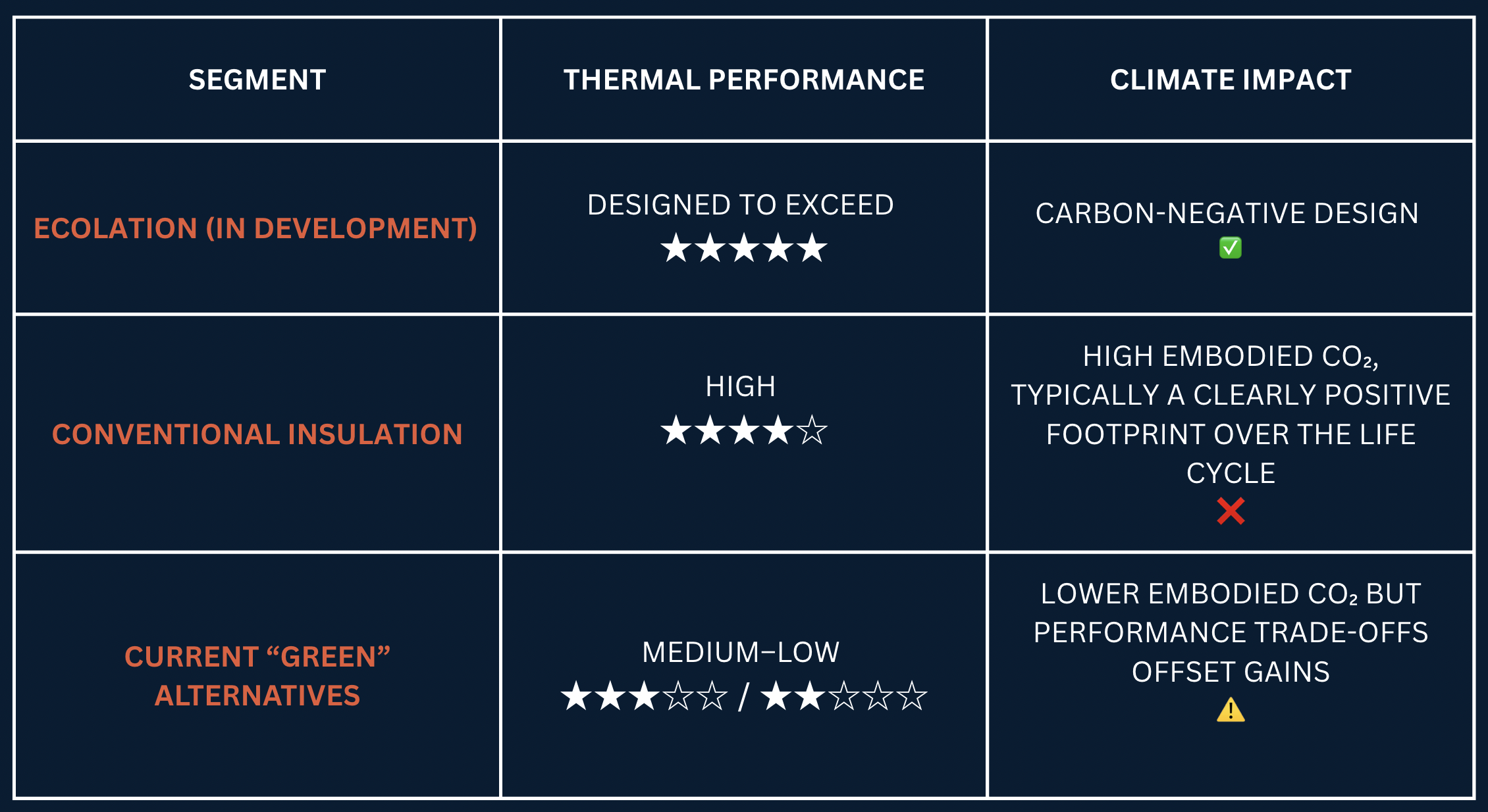
Most “green” insulation options – cellulose, hemp, cork and similar materials – are more climate-friendly in production, but they usually come with lower thermal performance → higher heating demand over the building’s lifetime, and higher material costs → more expensive than standard solutions.
Today, around 80% of the global insulation market is still dominated by mineral wool and polystyrene foam. They are cheap and performant – but far from climate-neutral.
What we do at Ecolation
We are building a new class of insulation material that is carbon-negative, high-performance, and cost-competitive with mineral wool.
Our process is designed to capture industrial CO₂ and permanently bind it into our material during production. For every tonne of Ecolation we produce, around 0.5 tonnes of CO₂ are captured and permanently stored in the material.
Thanks to an innovative production route, we can keep costs low and offer a truly competitive price point. High cost is usually what holds back CCUS ideas and our goal is to break this barrier.
Climate impact at scale
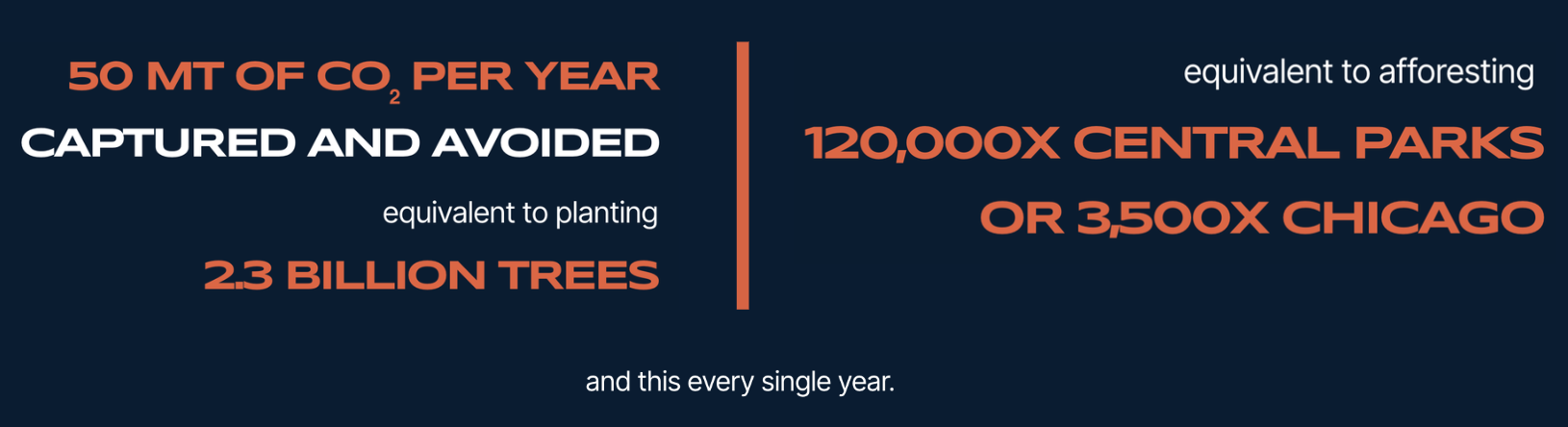
At scale, Ecolation could deliver significant climate impact in building insulation.
End-of-life & circularity
Ecolation is designed with its full life cycle in mind. From input streams to end-of-life.
Circular inputs
Our material concept is based on industrial CO₂ emissions and recycled paper fibres. Instead of treating CO₂ and waste paper as “end points”, we turn them into core raw materials, closing loops that would otherwise end in the atmosphere or in landfill / low-value uses.
Pyrolysis to biochar
At the end of its use phase, our insulation material can be pyrolysed and converted into biochar. Biochar is a stable form of carbon that stores CO₂ over very long time horizons, can improve soil health and water retention when used in agriculture, and supports long-term carbon removal strategies. This means that even after the building has reached the end of its life, Ecolation can still contribute to permanent carbon storage, rather than becoming another construction waste stream.
Ready for digital product passports
The EU is rolling out the Digital Product Passport (DPP) under the Ecodesign for Sustainable Products Regulation and the revised Construction Products Regulation. Our goal is to make Ecolation DPP-ready from day one: clear material composition, traceable origin of captured CO₂, and transparent data on performance and end-of-life options . So that future reuse, recycling, and carbon accounting of construction materials becomes much easier.