Competing Early: What We Learned from the From Lab to Market Challenge
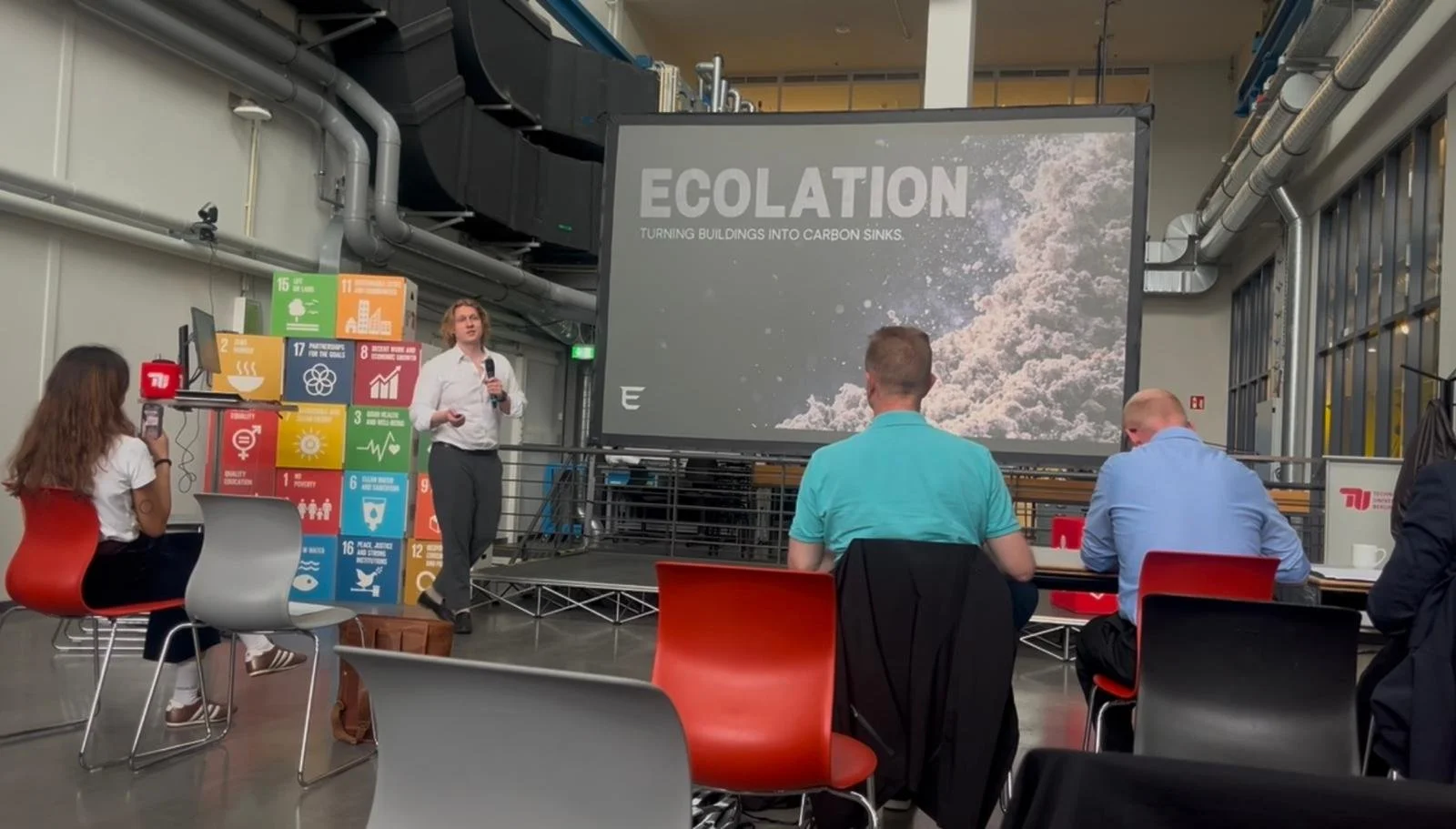
Dominik Thiel, CEO of ECOLATION
Participating in the From Lab to Market Challenge hosted by the GreenChem Invention Factory was an important milestone for us at Ecolation.
We were selected as one of twelve startups in the northern cohort of the program and ultimately finished in fourth place.
On paper, that may sound like a respectable but not exceptional result.
But in context, it meant more than that.
Ecolation was the only TRL II startup in the group, while most other participating ventures were already operating at TRL III to VI. In other words, we entered the challenge as the earliest-stage company in the room — with a concept that is still in its early validation phase, competing against teams with more mature technologies, more developed prototypes, and in some cases significantly more advanced technical progress.
External validation at a very early stage
For a deeptech startup, getting selected at such an early stage is already meaningful.
At TRL II, a company is not yet presenting a finished product, a validated prototype, or an industrial process ready for deployment. What it is presenting is something more fragile and more difficult to judge: a technically grounded concept, a credible path forward, and a team capable of turning early scientific logic into something commercially relevant.
Being selected into the challenge despite that early stage was therefore already a signal.
Finishing fourth in a field of significantly more mature ventures reinforced that signal even further.
It suggested to us that even at a comparatively early level of technological readiness, certain things can already stand out: clarity of problem framing, quality of team, market understanding, and the ability to communicate how a science-based concept could evolve into a real company.
Why early-stage deeptech is difficult to pitch
One of the recurring challenges for very early-stage deeptech startups is that they often live in an awkward middle ground.
They are too early to point to large-scale commercial traction.
Too early to rely on a fully validated product.
And too technical to be understood through startup language alone.
That means the pitch has to do something difficult: it must communicate ambition without exaggeration, scientific depth without becoming inaccessible, and commercial relevance without pretending the technology is further along than it actually is.
For startups at higher TRLs, a larger share of the story can be carried by what already exists: prototypes, pilot projects, test data, or operational proof points. At TRL II, much more of the case rests on something else:
the logic of the concept
the credibility of the path forward
the quality of the team
and the seriousness with which market and execution questions are already being addressed
That creates a different kind of burden but also a different opportunity.
Why team quality matters so much at TRL II
At very early stages, investors, partners, and judges are not really backing a finished technology.
They are backing a team’s ability to move a technology through uncertainty.
That is one reason why the challenge was a useful experience for us. It reinforced something we already believe strongly: in early-stage deeptech, team quality is not a side factor - it is one of the core assets.
When a company is still at TRL II, it cannot yet point to industrial rollout. What it can point to is whether it combines the right capabilities to get there.
At Ecolation, that means combining scientific materials expertise, financial and operational experience, and business-driven venture development. In our view, that combination matters enormously in bridging the gap between a promising concept and a future market-ready solution.
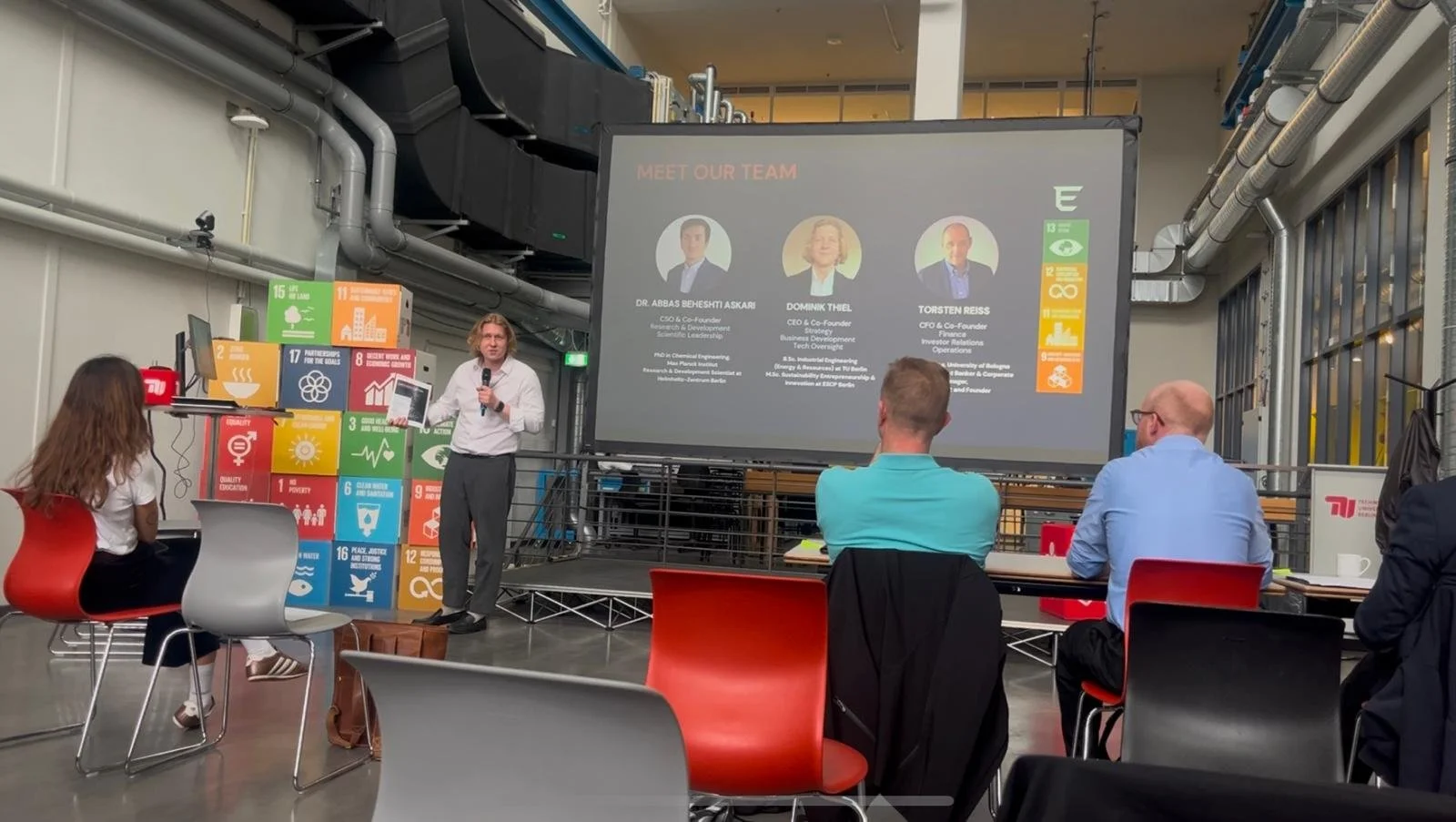
Dominik Thiel, CEO of ECOLATION
What the experience taught us
The challenge was not only a competition. It was also a useful reality check.
It reminded us that early-stage deeptech must constantly balance three things:
scientific credibility
commercial logic
and communication clarity
If one of those is missing, the overall story weakens quickly.
It also reinforced something else: very early-stage ventures are often judged not only on what they have already built, but on whether others can realistically imagine them becoming something larger.
That is a different kind of validation than technical proof alone, but it matters.
For us, placing fourth among more mature startups was therefore not simply a ranking result. It was a sign that Ecolation is already being taken seriously beyond the idea stage — even while much of the real technical work still lies ahead.
What comes next
At the same time, the result also puts our next priorities into sharper focus.
Strong communication, strategic framing, and team quality can bring an early-stage company a long way. But in deeptech, they are not substitutes for technological progress. They are only valuable if they are matched by continued validation and disciplined execution.
Our task now is to keep moving from concept toward proof: to deepen validation, reduce technical uncertainty, and continue building the foundations for a material system that can eventually compete in the real insulation market.
Conclusion
For Ecolation, participating in the From Lab to Market Challenge was meaningful not because we had already reached maturity, but because we had not.
Being the earliest-stage venture in the group and still finishing near the top reinforced our conviction that strong early-stage deeptech is about more than technology alone. It is about how clearly a problem is understood, how credibly a path is articulated, and whether the team looks capable of carrying the idea forward.
