From Lab Idea to Market Reality: What Technology Readiness Levels Actually Mean
When people hear about breakthrough technologies, they often imagine a sudden leap: one day it is an idea, the next day it is a product ready for the world.
In reality, technology does not work like that.
Whether you are building a new insulation material, a battery chemistry, or a space system, innovation usually moves through clearly distinguishable stages. First, the scientific principles are understood. Then the concept is formulated. Then it is tested in increasingly realistic conditions. Only much later does it become something robust enough to manufacture, deploy, and scale.
This is exactly why Technology Readiness Levels, or TRLs, exist.
Originally developed in the NASA context and later adopted far beyond aerospace, TRLs provide a shared language for describing how mature a technology really is. Instead of vague statements like “early-stage,” “validated,” or “almost ready,” the TRL framework breaks development into nine levels — from basic scientific observation at TRL 1 to a fully proven system in real-world operation at TRL 9.
Why NASA came up with the idea
The logic is simple.
If you are sending technology into space, you cannot afford ambiguity about whether something is truly ready. A promising concept is not enough. A small lab test is not enough. Even a prototype is not enough if it has never been proven under the conditions it will actually face.
NASA needed a disciplined way to distinguish between an interesting idea and a mission-ready technology. The TRL system emerged as a way to make that difference visible. Over time, it became much more than a space-sector tool. Today, it is widely used across deeptech, industrial innovation, and public funding environments because it gives founders, engineers, partners, and investors a more precise view of technological maturity.

The easiest way to understand TRLs
A useful way to think about TRLs is this:
A rocket is not “ready” because someone sketched it on paper.
It is not “ready” because a component worked once in a lab.
It is not even “ready” because a prototype looked promising.
It becomes ready step by step.
That same logic applies far beyond aerospace. In materials innovation, for example, the path usually starts with scientific understanding, moves into experimental proof, then into reproducible prototypes, then into testing under relevant conditions, and only later into scalable production and real-world deployment.
The TRL system captures exactly that progression.
The nine levels, without the jargon overload
Here is the practical meaning of the scale.
TRL 1 is the starting point: the basic scientific principles are observed and described. At this stage, there is knowledge, but not yet a defined technology.
TRL 2 means the technology concept begins to take shape. There is now an application in mind, even if it is still far from being proven.
TRL 3 is where the first proof of concept appears. The idea is no longer just theoretical; there is some form of analytical or experimental evidence that the concept could work.
TRL 4 means validation in the lab. Key components or formulations are tested in a controlled setting, and the technology begins to look more tangible.
TRL 5 moves into a more relevant environment. This is important because many technologies that look strong in the lab behave differently once conditions become more realistic.
TRL 6 usually means a prototype or representative model has been demonstrated in a relevant environment. At this point, the technology is no longer just an experiment; it is beginning to resemble a real application.
TRL 7 is a further step toward operational reality: a system prototype is demonstrated in an actual or near-operational environment.
TRL 8 means the technology is complete and qualified. It has been tested thoroughly and is close to deployment.
TRL 9 is the final stage: the actual system has been proven in operational use. At that point, the technology is no longer “emerging.” It is real, deployed, and functioning in the field.
Why TRLs matter so much for startups
For startups, TRLs are useful because they create clarity where hype can otherwise take over.
In early-stage technology companies, it is easy for outsiders to hear a compelling vision and assume the technology is almost ready. But there is a major difference between:
understanding the science,
proving a concept,
validating a prototype,
and being ready for industrial rollout.
These are not minor distinctions. They are often the difference between scientific promise and commercial viability.
That is why TRLs are so valuable in conversations with investors, grant providers, industrial partners, and technical advisors. They help set realistic expectations. They make progress easier to communicate. And they reduce the temptation to describe development in vague, overly optimistic terms. In Europe, TRLs are also deeply embedded in the language of research commercialization and innovation funding, which is one reason they have become such a common reference point for deeptech ventures.
What TRLs do — and what they do not do
TRLs are powerful, but they are not the whole story.
A higher TRL does not automatically mean a company will succeed commercially. A technology can be mature and still fail because of cost, regulation, supply chains, customer adoption, or manufacturing constraints.
And the reverse is also true: a technology at a relatively early TRL can still be extremely valuable if it addresses an important problem and shows credible technical progress.
So TRLs should not be misunderstood as a measure of company quality or market attractiveness. They are more specific than that. They answer one core question:
How technologically mature is this innovation today?
That makes them incredibly useful — but only when interpreted correctly.
Why this matters in climate and materials innovation
In sectors like construction materials, climate tech, and industrial decarbonization, development cycles are often longer and more complex than in pure software.
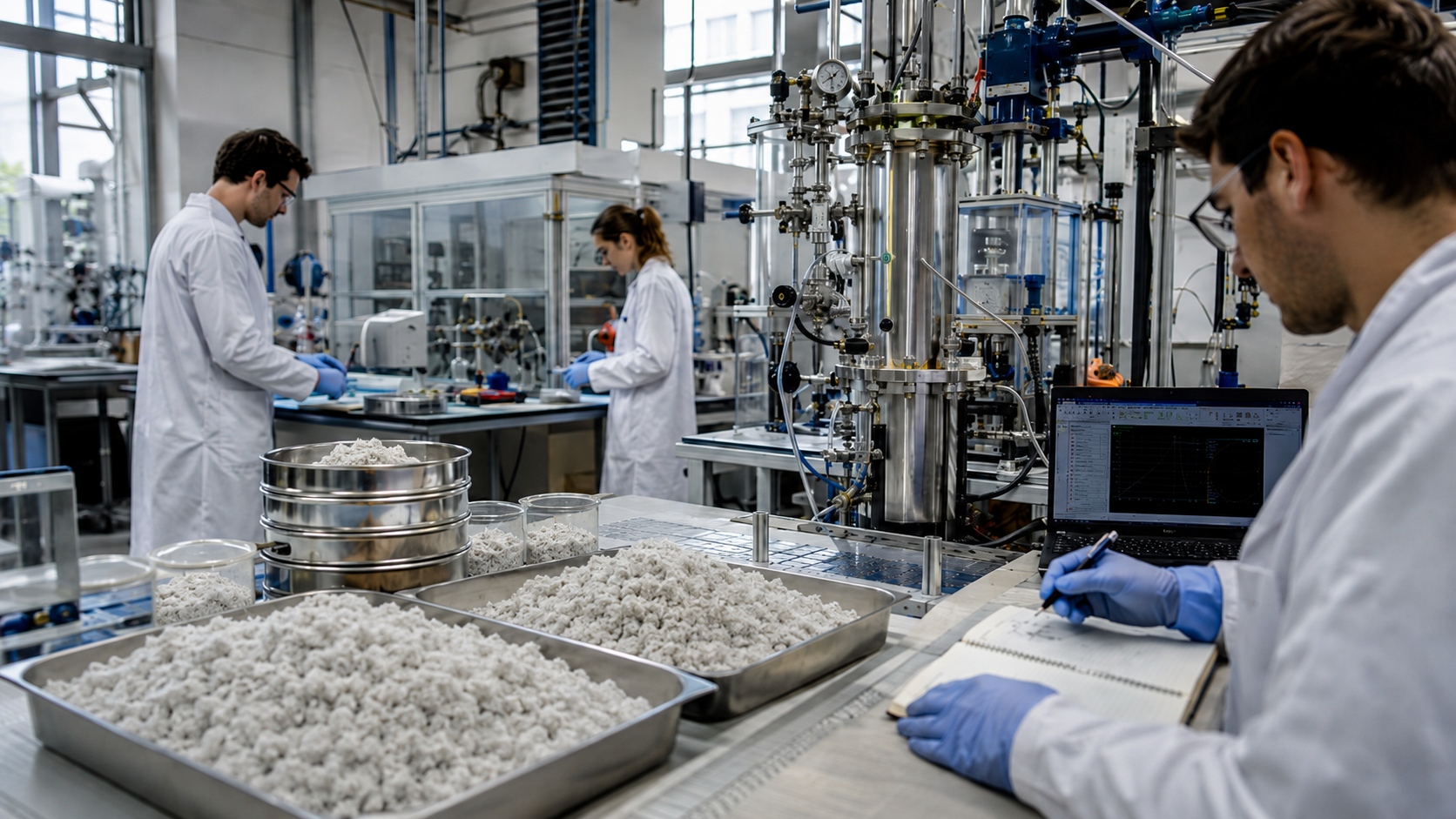
You are not just launching code.
You are dealing with chemistry, process stability, material behavior, safety requirements, manufacturing realities, certification pathways, and field performance.
That is exactly why a structured maturity framework matters.
In these industries, “promising” is not enough. A new material must move from scientific plausibility to repeatable validation, from validation to application relevance, and from there toward scalable deployment. The TRL lens helps make that journey legible.
How we think about TRLs at Ecolation
At Ecolation, we see TRLs as more than a classification tool. We see them as a discipline.
They help translate a complex development journey into something structured and understandable. They force precision about where a technology truly stands. And they remind everyone involved that real innovation is not a single leap, but a sequence of de-risking steps.
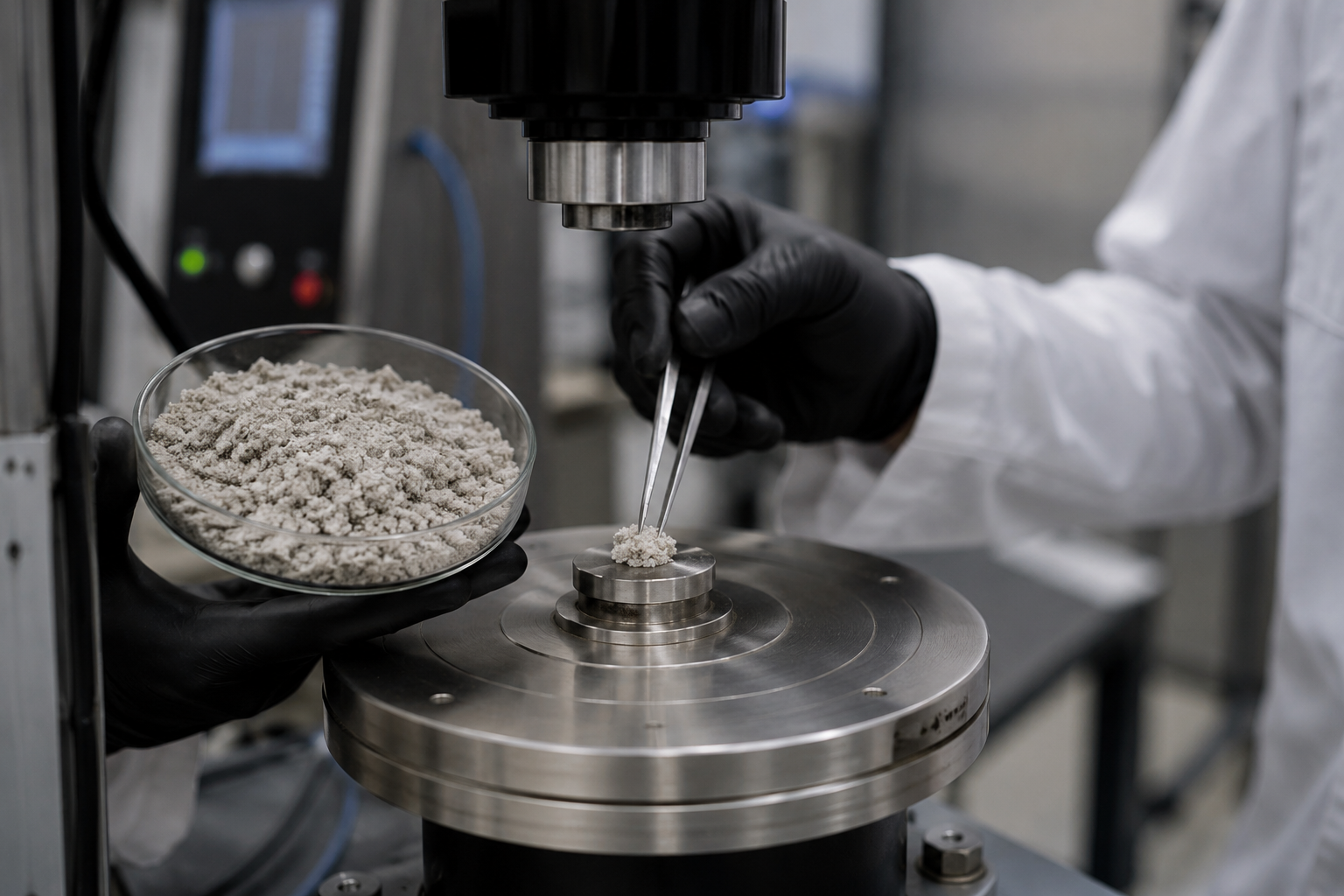
That is one reason TRLs are such a useful framework not only for engineers, but also for investors and strategic partners. They make visible what often remains hidden behind ambitious language: the difference between a compelling idea, a validated technology, and a scalable industrial solution.
Conclusion
Technology Readiness Levels may have roots in the world of rockets, but their real value is much broader.
They give innovation a map.
They show how a technology moves from scientific insight to real-world deployment. They create a common language across technical and non-technical stakeholders. And they help separate what is imagined, what is demonstrated, and what is truly ready.
For any startup building hard technology, that distinction matters.
Because in deeptech, the question is never just whether an idea is exciting.
The real question is: how far along the journey it truly is.